You may have spent years as a carpenter, concreter, waterproofer, supervisor or builder without ever completing the exact qualification now listed for a QBCC licence. Recognition of prior learning, RPL, may let you prove those skills instead of repeating training you have already covered on site.
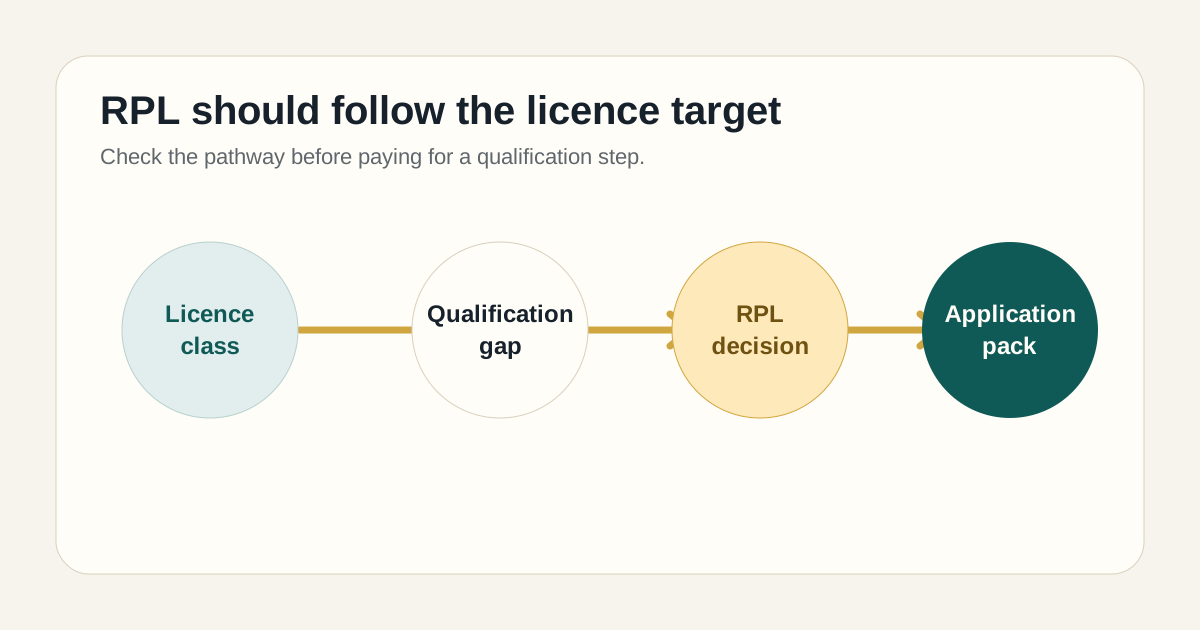
Before you pay an RTO, check which QBCC licence you are applying for and which qualification it requires. Otherwise, you can finish an RPL assessment that does not solve the qualification gap in your licence application.
RPL is not a shortcut around the rules. It is a way for a registered training organisation, RTO, to assess what you already know and can prove. If your experience covers all or part of the qualification or units you need, you may receive full or partial credit rather than starting from the beginning.
When RPL is worth looking at
RPL may be a good fit when:
- you have substantial experience doing the work
- the QBCC licence you want requires a qualification you do not hold
- you can show what you did through projects, records and people who know your work
- the RTO offers RPL for the relevant units or qualification
For example, an experienced carpenter may have spent years working across renovations, framing and site supervision but never completed the qualification required for the builder class they are now considering. An RTO can assess whether that experience meets some or all of the training requirements.
The evidence is different for every person. An RTO may ask for photographs, job records, plans, invoices, training records, references, interviews or practical assessments. The RTO decides what is enough.
When RPL may not be the answer
Do not pay for RPL just because someone says every licence applicant needs it. You may not need RPL if:
- you already hold the qualification QBCC requires
- an existing qualification may be accepted as equivalent
- mutual recognition is the more suitable application
- the real gap is licence experience, referees, financial information or application documents
- you have not yet worked out which QBCC licence lets you quote or supervise the jobs you are planning
This is why the licence target comes first. RPL for the wrong qualification can cost time and money without moving the application forward.
Check the licence before you pay for RPL
1. Explain the change you are trying to make
You do not need to arrive knowing the QBCC terminology. Are you planning to quote directly to clients, supervise for another builder, contract complete projects or add another trade to your business? That practical change is the starting point.
2. Check the likely QBCC licence and qualification
The licence class tells you which qualification matters. Builders Licence Success can check the likely class and qualification before you commit to a course or RPL assessment.
3. Check what your existing experience may cover
If there is a qualification gap, an RTO can explain its RPL process and evidence requirements. RPL is assessed against a training product, such as units of competency or a qualification. QBCC notes that not every type of building work can be recognised through RPL.
4. Finish the rest of the licence preparation
Even a successful RPL result is only one part of the application. QBCC may still need experience records, referees, identity documents, financial information and other material for the licence type and class.
What BLS checks before you approach an RTO
BLS starts with the QBCC licence you are trying to obtain, not a course sale. We check the likely licence class, qualifications and completed units you already hold, then identify whether there is a genuine qualification gap. We also help prepare the experience records, referees and other documents the separate QBCC application may need.
If RPL is needed, the assessment must be completed by an RTO. If it is not needed, you can focus your time and money on the evidence and documents the licence application still needs.
For a plain-English explanation of how RPL, a qualification and a state licence fit together, read Can RPL help you get a builder licence?. If you are preparing for an RTO conversation, use the RPL evidence guide for builders and trades.
Before paying for RPL, check the QBCC licence and qualification first. Tell BLS which licence you are considering, which qualifications you already hold and how long you have performed the relevant work.
FAQ
Can RPL mean I do not have to repeat training?
Possibly. If an RTO is satisfied that your existing skills and evidence meet all or part of the relevant training product, you may receive full or partial credit. Any remaining gaps may require further training or assessment.
Does RPL guarantee a QBCC licence?
No. The RTO decides the RPL outcome. QBCC separately assesses the licence application and makes the final decision.
Should I contact an RTO before checking the licence?
You can, but checking the likely QBCC licence and required qualification first reduces the risk of paying for the wrong RPL assessment.
Does BLS provide qualifications?
No. BLS is not an RTO. We help identify the likely QBCC application and prepare its supporting material.