Ready to quote carpentry, painting, waterproofing, tiling or another trade under your own name or business? A QBCC trade contractor licence may let you contract for work within the relevant trade class. Some work also requires an occupational licence.
You already know the trade. The frustrating part is working out which licence applies, whether your current qualification is accepted and which business documents belong with the application.
Builders Licence Success checks those points before you spend money on a course or start filling in forms. Tell us the trade jobs you plan to quote, how you will operate and which qualifications or licences you already hold. We can then explain what is still missing.
If you want to run whole building projects rather than contract for one trade, read the QBCC builder licence versus trade contractor licence guide.
Are you ready to quote under your own business?
A trade contractor licence may fit if you plan to:
- quote and contract directly with clients for your trade
- subcontract your trade work to licensed builders
- move from being an employee to running your own trade business
- apply for another trade class where you can demonstrate the relevant qualifications, experience and other QBCC requirements
For example, a carpenter who wants to quote carpentry packages may need a QBCC carpentry contractor-type licence. The application still needs to meet the qualification, experience, managerial, financial and other requirements for that class. Taking responsibility for an entire renovation or new build may point to a builder pathway instead.
What do you need to get started?
You do not need to understand every QBCC form or class name. BLS starts with:
- Your trade and work history. What you have been doing and for how long.
- The jobs you plan to quote. Describe the trade work your business will carry out and who will engage you.
- Your existing paperwork. Trade certificates, licences, course records and any business documents you already hold.
- Evidence of your work. Photos, job records, references or other material that can support your experience where required.
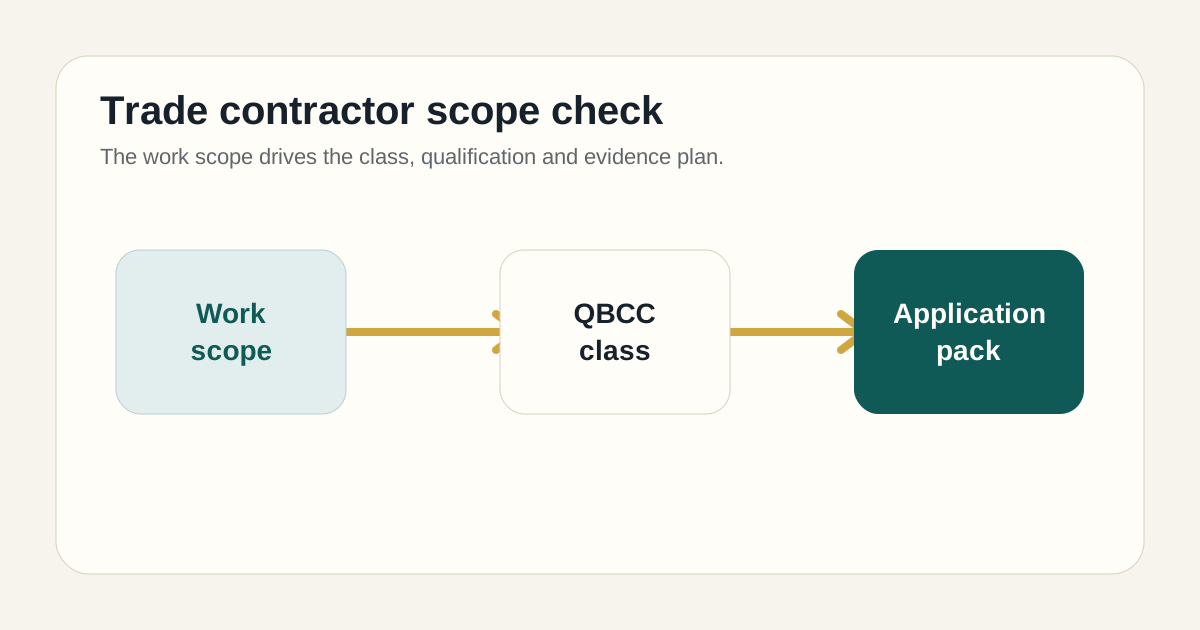
We then compare those jobs with the likely QBCC trade class, check its qualification requirement and list the documents your application will need.
Can your experience count through RPL?
Possibly. Recognition of Prior Learning is designed for people who have learned skills through real work, not only in a classroom.
An RTO may ask for work samples or a portfolio, training records, employer references and other evidence relevant to the units being assessed. If you can prove all the required skills, RPL may lead to the qualification you need. If the evidence does not cover every required competency, the RTO may require additional training or assessment for the remaining gaps.
The important part is checking the licence first. There is no value in paying for a qualification that does not match the QBCC trade class you need. The RTO makes the RPL decision, and QBCC makes the licence decision.
What BLS checks before you pay or lodge
BLS can help you:
- identify the likely trade contractor class from the jobs you plan to quote
- check whether your current qualification appears to fit that class
- identify whether an RPL or training conversation is genuinely needed
- organise the supporting documents and business information
- prepare the application material so names, business details and supporting documents agree before lodgement
That means you do not have to piece the order together yourself by jumping between QBCC pages, course providers and application forms.
Common reasons applications get held up
- The qualification is for a similar trade, but not the licence class being requested.
- The business or nominee documents do not match the way the applicant plans to operate.
- The applicant assumes years on the tools automatically cover every requirement.
- RPL or training is purchased before anyone checks which qualification is actually needed.
- Important information is missing or inconsistent across the application documents.
Finding these issues before lodgement gives you a chance to correct them while the evidence and project details are still easy to verify.
Ready to stop relying on someone else to quote your trade work? Check your QBCC trade contractor application. Tell BLS your trade, the jobs your business will quote and the qualifications you already hold.
FAQ
Do I need a trade contractor licence to subcontract to a builder?
If you subcontract directly to a licensed builder, QBCC generally requires the appropriate contractor licence for the subcontracted work. Different arrangements, including subcontracting to a licensed trade contractor, can have different requirements. An occupational licence may still be required for some work.
Do I need to know the QBCC class before contacting BLS?
No. Tell us your trade and the jobs your business will quote. We can help identify the likely class and the documents that go with it.
Can RPL save me from doing a full course?
It may. An RTO can assess the skills and knowledge you can prove. You may receive credit for all or part of a qualification, with additional training or assessment required for any remaining gaps.
Does BLS issue the licence or qualification?
No. An RTO decides any RPL or qualification outcome, and QBCC decides the licence application. BLS explains the relevant requirements and prepares the application material with you.